
I agree Our site saves small pieces of text information (cookies) on your device in order to deliver better content and for statistical purposes. You can disable the usage of cookies by changing the settings of your browser. By browsing our website without changing the browser settings you grant us permission to store that information on your device.
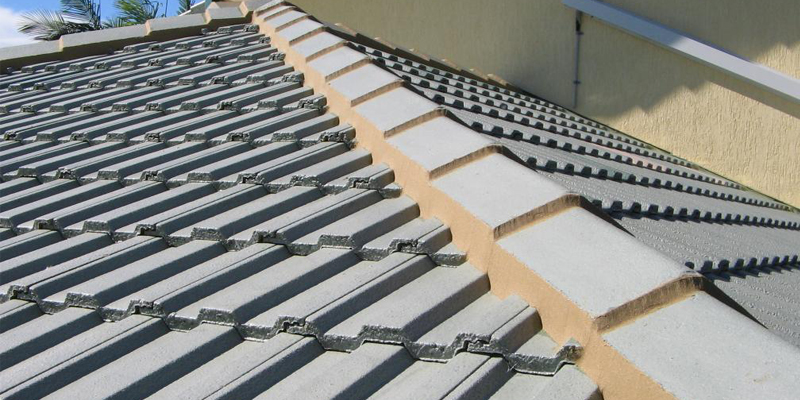
Raynes Roofing provides roof pointing in Woking for deteriorated mortar around ridge tiles, hip tiles and other appropriate mortar-bedded roof details. The work can range from repairing a small section of cracked or missing mortar to removing and rebedding loose ridge or hip tiles where the existing bedding has failed.
Roof pointing should not be treated as a cosmetic layer applied whenever mortar looks weathered. The first question is whether the exposed mortar alone has deteriorated or whether the bedding beneath it, the tile itself or its fixing has also become loose.
Mortar deterioration → stability assessment → repoint, re-bed or replace the affected detail.
Roof pointing is the repair or finishing of exposed mortar around mortar-bedded roof components such as ridge and hip tiles. The mortar helps form a weather-resistant junction and protects the bedding beneath from direct exposure.
Pointing is only one part of the detail. A ridge or hip tile also needs to remain correctly positioned and securely fixed. Modern pitched-roof guidance requires ridge and hip tiles to be mechanically fixed even where mortar bedding is used, because mortar should not be relied upon as the sole means of resisting movement or wind uplift.
This creates an important distinction:
Roof bedding is the mortar bed used beneath certain roof fittings, particularly traditionally installed ridge and hip tiles. It provides support beneath the tile and forms part of the completed junction.
Bedding should not be confused with the battens and mechanical fixings used to secure the main field of roof tiles. Nor should mortar bedding alone be assumed to provide the required fixing for a modern ridge or hip detail. BS 5534 requires mortar-bedded ridge and hip tiles to have additional mechanical fixing.
The relationship is therefore:
The correct intervention depends on how far the mortar failure has progressed. Raynes Roofing can assess and repair the principal mortar-bedded details found on pitched roofs:
The service is therefore not simply “replace old mortar”. The repair should identify which part of the detail has actually failed before new mortar is applied.
Roof pointing needs attention when exposed mortar has deteriorated sufficiently to lose adhesion, crack, break away or leave the underlying roof detail vulnerable.
Visible signs can include:
The condition of the tile is more important than the appearance of the mortar alone. If a ridge or hip tile moves when its surrounding bedding has failed, repointing the exposed edge does not restore the complete detail.
Repointing repairs deteriorated exposed mortar while retaining a sound bedding layer. Rebedding removes a loose or failed tile and reconstructs the mortar bed beneath it.
This distinction determines the repair depth:
Repointing over failed bedding can make a defective detail look complete while leaving the tile inadequately supported. Conversely, removing secure ridge tiles simply because small areas of exposed mortar need repair can create unnecessary work.
The assessment should establish whether deterioration is confined to the mortar surface or extends into the bedding and fixing of the roof tile.
This produces a defined intervention rather than assuming every cracked mortar joint requires the same repair.
New pointing should only be applied where the material beneath provides a suitable, stable base. Applying fresh mortar over loose, fractured or poorly bonded material does not correct the failure beneath it.
The relevant sequence is:
remove loose material → expose stable retained mortar → prepare the joint → install compatible repair material → finish the detail.
If removing the defective pointing reveals that the bedding beneath has also separated or deteriorated, the scope changes from repointing to rebedding.
Mortar deterioration can result from several mechanisms acting on an exposed roof junction:
The repair should therefore address the relationship between mortar condition + tile stability + bedding condition + fixing, not the crack in isolation.
No. A loose ridge tile should not simply be repointed if the movement is caused by failed bedding or inadequate fixing. Repointing works at the exposed mortar edge. It does not reconstruct failed bedding beneath a loose tile.
A loose ridge tile should instead be assessed to determine:
Modern guidance requires ridge and hip tiles to be mechanically secured rather than relying on mortar alone.
A mortar-bedded ridge uses mortar beneath and around the ridge tiles, while a dry-fix ridge uses purpose-designed mechanical components rather than mortar to secure and weather the ridge.
Dry-fix systems typically secure ridge tiles mechanically to the roof structure and can incorporate a ventilating ridge roll beneath the tiles. Systems manufactured for this purpose are designed around BS 5534 and the separate BS 8612 standard covering dry-fixed ridge, hip and verge systems.
Mortar bedding has not disappeared. It can still be used where appropriate, including where a traditional mortar appearance is required, but the ridge or hip tile must also have the required mechanical fixing.
The options are therefore distinct:
Cracked or missing pointing can contribute to weather penetration around a defective ridge or hip detail, but visible mortar cracking does not prove that it is the source of an internal roof leak.
Rainfall appearing inside a roof can also originate from damaged tiles, failed underlay, flashing, valleys, roof penetrations or another defect further up the roof slope.
The correct diagnostic relationship is:
visible cracked mortar + internal leak → inspect the complete ridge or hip detail → confirm the water-entry route → repair the actual failure.
This prevents pointing from becoming a default explanation for every leak located below a ridge.
Yes, a local repair can be appropriate where deterioration is genuinely confined to one tile or a short section and the surrounding ridge remains secure.
The size of the repair should be determined by the boundary between defective and serviceable material. If adjoining mortar is already cracked, detached or unstable, stopping the repair immediately beside it can leave another likely failure unresolved.
This creates a simple scope rule:
Repointing becomes unsuitable when the components beneath the exposed mortar can no longer be reliably retained.
Broader renewal should be considered where:
The decision is therefore based on the condition that would remain after repair:
Yes. Roof pointing and chimney repointing both involve mortar, but they repair different building components.
Roof pointing normally refers to mortar associated with roof fittings such as ridge, hip or traditional verge details. Chimney repointing involves renewing deteriorated mortar joints between masonry units within the chimney stack.
This distinction matters because a leak around a chimney can involve several separate components:
Repairing one component does not automatically correct a defect in another.
Routine like-for-like maintenance and local roof pointing will not normally create the same planning issues as materially altering the roof, but protected properties can require additional consideration.
This is locally relevant because Woking Borough Council identifies 27 conservation areas with special architectural or historic interest and also maintains information on listed buildings within the borough.
For an ordinary roof, renewing failed mortar without materially changing the appearance is primarily a maintenance issue. Where the building is listed, lies within a conservation area or the work would alter an important historic detail, the property's specific planning and heritage constraints should be checked before changing the roof construction or appearance.
The work method depends on whether the existing tile and bedding can remain. A genuine repointing repair is shallower than rebedding a failed ridge or hip.
For a repairable pointed detail, the sequence is:
If the tile is loose or the bedding fails during assessment, the process changes:
remove tile → remove failed bedding → prepare detail → reinstate bedding and required fixing → replace ridge or hip tile → finish junction.
Raynes Roofing can assess roof pointing as part of the complete ridge or hip detail rather than treating every cracked mortar joint as the same problem. Repairs can range from one localised section of deteriorated pointing to rebedding multiple loose ridge or hip tiles where the failure extends beneath the visible surface.
The purpose of the assessment is to establish the smallest appropriate repair that leaves a serviceable detail:
pointing condition + bedding condition + tile condition + fixing + surrounding roof → repair specification.
Raynes Roofing has been established for more than 45 years and provides guarantees covering its roofing workmanship as well as applicable roofing materials.
If mortar around your ridge or hip tiles is cracked, missing or coming loose, contact Raynes Roofing for roof pointing in Woking. The affected detail can be assessed to determine whether it requires local repointing, rebedding, tile replacement or wider ridge or hip repair.
Contact Raynes Roofing for advice or a quotation for roof pointing work in Woking.