
I agree Our site saves small pieces of text information (cookies) on your device in order to deliver better content and for statistical purposes. You can disable the usage of cookies by changing the settings of your browser. By browsing our website without changing the browser settings you grant us permission to store that information on your device.
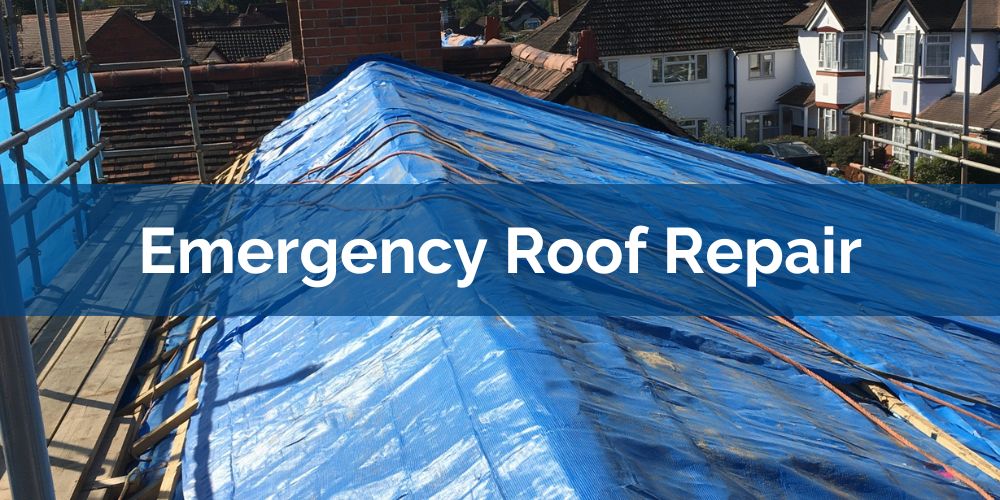
Raynes Roofing provides emergency roof repair in Woking for active leaks, storm damage, displaced roof coverings and other urgent roofing defects requiring rapid assessment. Operating from Knaphill, Woking, the team provides emergency roofing support across Woking, Guildford and surrounding areas.
An emergency roof repair has a different objective from a routine roof repair. The first priority is to determine whether the roof can be accessed safely and whether immediate work can reduce further water entry or prevent loose roofing materials from creating additional risk. A permanent repair can then follow once the defect, surrounding roof condition and required materials have been established.
Emergency reported → safety assessment → limit further damage → identify defect → temporary or permanent repair → completion check.
Yes. Raynes Roofing operates a 24/7 emergency roofing helpline for urgent roofing problems in Woking and the surrounding area.
Where conditions allow, the aim is to assess the problem and carry out an appropriate repair as quickly as practicable. Immediate roof work cannot, however, be guaranteed in every situation because access, darkness, high winds, heavy rain, ice or other hazardous conditions can make roof work unsafe.
The emergency response therefore follows a safety threshold:
safe access + identifiable repair + suitable conditions → immediate work may be possible;
unsafe roof conditions → make the situation safe where practicable and complete roof work when safe access is available.
The 24/7 service means the roofing emergency can be reported at any time. It does not mean operatives will work on an unsafe roof simply because the problem is urgent.
A roofing problem becomes an emergency when delaying action is likely to allow substantial additional water entry, expose the building to further weather damage or leave unstable roofing components in a hazardous condition.
Emergency situations can include:
Not every roofing defect requires emergency attendance. A small historic stain with no active ingress, for example, can normally be assessed as a routine roof repair. The defining factor is the current risk of further damage or instability.
The first stage of an emergency roofing response is triage: establishing what has happened, whether water is actively entering and whether the roof can be approached safely.
This prevents urgency from replacing diagnosis. A fast repair is only useful if it addresses the component causing the emergency.
Sometimes. A permanent repair can be completed during the initial visit where the defect is accessible, the required materials are available and weather conditions allow the repair to be installed correctly and safely.
Other situations require two stages:
active leak → emergency weatherproofing → permanent repair.
This can occur where:
A temporary repair should therefore be identified as temporary rather than presented as the completed roofing solution.
Temporary weatherproofing is an interim measure intended to reduce further water entry until the defective roof can be repaired permanently.
The appropriate method depends on the roof type and damage. Its purpose is to control the immediate exposure without pretending that damaged roofing has already been reconstructed.
The distinction is:
temporary weatherproofing → controls immediate exposure;
permanent repair → restores the failed roofing component or detail.
A temporary intervention should be followed by assessment of the underlying defect because stopping visible water for one rainfall event does not necessarily mean the roof has been permanently repaired.
Emergency roofing still has to be carried out under conditions that allow operatives to work safely. High winds, heavy rain, ice, poor visibility and unstable roof surfaces can make access more dangerous precisely when a roof is most likely to have suffered damage.
This creates an important distinction:
urgent problem ≠ automatically safe working conditions.
Where roof access would expose operatives or people below to unacceptable risk, the immediate response may need to focus on controlling the situation from a safer position and returning to complete roof-level work when conditions allow.
Raynes Roofing's 24/7 emergency helpline remains available for reporting the problem and determining the appropriate response even when extreme weather prevents immediate permanent repair.
An emergency leak is located by connecting the internal point of water entry with the roof components capable of admitting and directing that water.
The ceiling stain or drip is not necessarily directly below the external defect because moisture can travel along underlay, decking, rafters or other surfaces before becoming visible.
The investigation follows:
This reduces the risk of applying an emergency patch directly above the internal leak while leaving the true entry point untouched.
Pitched-roof emergencies commonly involve damage to tiles, slates or the junctions between them and other roof components.
Emergency work can include:
The scope should extend far enough to reach stable surrounding roofing. Replacing one visible tile is insufficient if adjoining tiles, battens or underlay have also been damaged by the same event.
Emergency flat roof repair focuses on restoring continuity to the waterproofing system where a local defect is allowing active water entry.
Potential emergency defects include:
The repair decision depends on the condition around the defect:
isolated defect + sound surrounding membrane → local emergency repair may be possible;
damaged area + uncertain underlying condition → temporary weatherproofing + further investigation;
widespread membrane failure → emergency control followed by refurbishment or replacement assessment.
Yes. Storm damage can often be repaired where the affected roof components can be isolated and the remaining roof is serviceable.
Wind and falling debris can affect several components during the same event, so the inspection should not stop at the first visible defect.
A storm assessment can include:
The repair boundary should follow the storm damage rather than the location from which the first loose component is visible from ground level.
Where water is entering during severe weather, the immediate priority is to protect people and reduce internal damage without attempting unsafe access to the roof.
Practical actions can include:
The roofing response can then determine whether immediate external access is safe or whether roof-level work must wait for conditions to improve.
No. A property owner should not climb onto a wet, damaged or storm-exposed roof to attempt an emergency repair.
The conditions creating the leak can also make the roof surface, ladders, edges and loose roofing materials more dangerous. A missing tile is a property problem; a fall from the roof creates a much more serious emergency.
The safer sequence is:
control internal water where safe → keep away from unstable areas → contact an emergency roofer → allow roof access to be assessed professionally.
Loose tiles, slates, ridge components or chimney materials should be treated as both a roofing defect and a potential falling-material hazard.
The emergency response may therefore have two objectives:
prevent further water entry + prevent unstable material from falling.
The exact action depends on safe access. A loose component that can be secured or removed safely may be dealt with during the initial response. Where access is unsafe, people should be kept away from the area below until the hazard can be addressed.
Yes. Sudden water entry around a chimney can require emergency attendance where the leak is active or where storm damage has displaced chimney or flashing components.
The likely causes include:
The repair should therefore distinguish chimney masonry failure from chimney-to-roof junction failure. Repointing mortar will not stop an emergency leak caused by displaced flashing.
Yes, where severe blockage, displacement or damage is causing large quantities of rainwater to discharge against the building rather than through the intended drainage route.
The pathway is:
roof runoff → gutter → outlet → downpipe → discharge.
If the gutter or outlet becomes obstructed during heavy rainfall, water can overflow at roof level. Emergency work may involve clearing an accessible blockage, securing a displaced gutter or making a damaged section safe, with permanent repair completed where required.
A drainage problem should still be distinguished from water originating behind the gutter through a defective roof edge.
An emergency repair is not sufficient where the defect forms part of wider roof deterioration that cannot be reliably resolved through a local intervention.
Broader work may be required where:
The emergency intervention can still reduce immediate exposure, but the longer-term pathway becomes:
stabilise → assess → specify wider repair or replacement → restore complete roof.
Emergency roof repair prioritises an active or immediate risk, while routine roof repair addresses a defect that can be inspected and scheduled without the same urgency.
The difference is primarily timing and risk:
active leak or unstable roof component → emergency response;
known defect without immediate escalation → routine repair;
temporary emergency measure → permanent repair still required;
completed permanent emergency repair → no separate routine repair required for that same defect.
This keeps the Emergency Roof Repair Woking service distinct from Raynes Roofing's broader roof repair service.
Yes. “Emergency” describes why and when the repair is required, not necessarily whether the repair is temporary.
If the defect is clearly identified, conditions are suitable and the correct permanent repair can be completed safely during the emergency visit, there is no requirement to install an unnecessary temporary patch first.
The two possible routes are:
emergency + repairable immediately → permanent repair;
emergency + conditions or scope prevent completion → temporary protection → permanent repair later.
The customer should therefore be told which type of intervention has been completed.
The emergency repair boundary should extend far enough to control the immediate problem while identifying whether additional damage requires a wider permanent repair.
This creates the core emergency roofing decision:
urgency + safety + defect + extent + weather conditions → immediate repair strategy.
Yes. Raynes Roofing operates from Knaphill, Woking and provides emergency roofing support across Woking, Guildford and surrounding areas.
Being based in Woking means the emergency service covers the same local area in which Raynes Roofing carries out its wider roofing work, including repairs to pitched roofs, flat roofs, chimneys, leadwork and roof drainage.
The service location and repair scope remain separate:
Woking and surrounding area → where Raynes Roofing responds;
roof type + defect + safety conditions → what the emergency repair requires.
Raynes Roofing provides a 24/7 emergency roofing helpline and can assess urgent defects across pitched roofs, flat roofs, chimneys, leadwork and associated roof drainage.
The response is based on the condition found rather than treating every emergency as an immediate patch:
safe + permanently repairable → repair;
safe + permanent repair not yet possible → temporary weatherproofing;
unsafe conditions → control the immediate risk where practicable and complete roof work when safe;
wider roof failure → stabilise first, then define the required permanent work.
Raynes Roofing has been established for more than 45 years and offers guarantees covering its roofing workmanship and applicable roofing materials.
If your roof is actively leaking, tiles or slates have been displaced, storm damage has exposed part of the roof or another roofing defect requires urgent attention, contact Raynes Roofing for emergency roof repair in Woking.
Our emergency roofing helpline operates 24 hours a day, 7 days a week. Immediate roof-level work remains dependent on weather conditions, safe access and operative safety.
Call 01483 475141 for emergency roofing assistance.