
I agree Our site saves small pieces of text information (cookies) on your device in order to deliver better content and for statistical purposes. You can disable the usage of cookies by changing the settings of your browser. By browsing our website without changing the browser settings you grant us permission to store that information on your device.
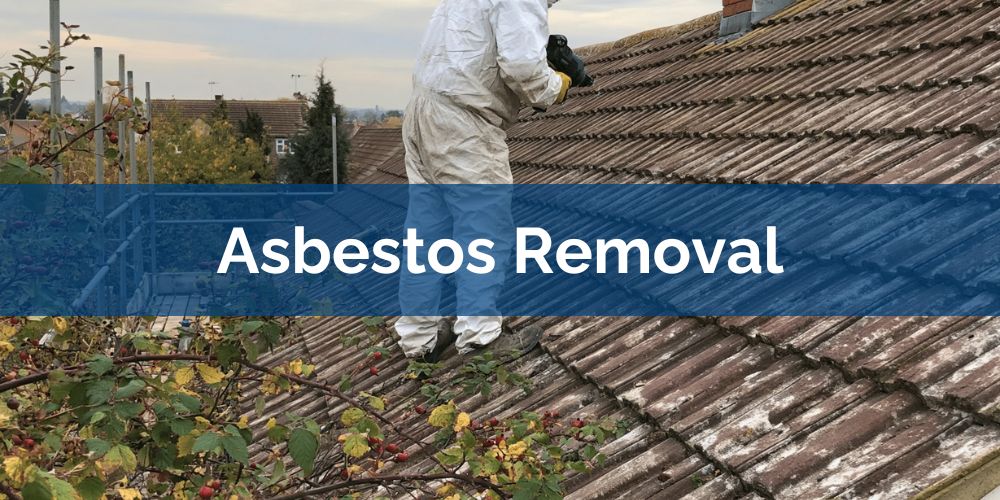
Raynes Roofing can help arrange asbestos roofing removal and management services in Woking where asbestos-containing materials are present or suspected within an existing roof. The appropriate route can include asbestos identification, survey and sampling, management of material that can safely remain in place, controlled removal by appropriately trained or licensed asbestos contractors, disposal of asbestos waste and subsequent roof replacement.
Asbestos roofing should not automatically be removed simply because asbestos is present. The first decision is to establish what material is present, its condition, whether proposed roofing work will disturb it and what legal category the work falls within. HSE states that asbestos can occur in buildings constructed or refurbished before 2000, and the material cannot be positively identified by appearance alone.
Suspected asbestos → identify material → assess condition and proposed disturbance → determine work category → manage, encapsulate or remove → dispose correctly → complete replacement roofing where required.
Asbestos roofing projects can require several different specialist services rather than removal alone. Raynes Roofing can help coordinate the roofing requirement with the appropriate asbestos-management route:
The required route depends on the asbestos-containing material, not simply on the fact that it is located on a roof. HSE separates lower-risk work involving asbestos cement from higher-risk asbestos materials that can require an HSE-licensed contractor.
Asbestos associated with roofing is most commonly encountered in asbestos cement products, but asbestos-containing materials can also occur elsewhere within older roof and building assemblies. HSE guidance specifically identifies asbestos cement roofing and cladding and also lists asbestos-containing bituminous products among materials that can be encountered during building work.
Potential roofing-related locations can include:
This is why a corrugated sheet should not simply be described as “an asbestos roof” based on appearance. Suspected material and confirmed asbestos-containing material are separate classifications.
You cannot reliably confirm that a roofing material contains asbestos from its appearance alone. HSE states that the only way to confirm whether a suspect material contains asbestos fibres is through sampling and analysis. Sampling should be undertaken by a suitably trained person, and analysis should be completed by an appropriately accredited laboratory.
The identification pathway is therefore:
For refurbishment or demolition work that will disturb building fabric, HSE identifies a refurbishment or demolition survey as the relevant intrusive survey. HSE also strongly recommends competent surveyors accredited to BS EN ISO/IEC 17020.
No. The presence of asbestos does not automatically mean that immediate removal is the correct response. The appropriate action depends on the asbestos-containing material, its condition, likelihood of disturbance and what is planned for the building.
The decision can be separated into three routes:
sound ACM + unlikely to be disturbed → management in place may be appropriate;
suitable ACM + requirement for additional protection → encapsulation or enclosure may be considered;
damaged ACM or roofing work requiring its disturbance/removal → controlled asbestos work is required.
HSE guidance recognises leaving asbestos in place and managing it as a valid option where the material can remain safely managed. It also identifies encapsulation or sealing of asbestos in good condition among examples of work that can, depending on the circumstances, fall within non-licensed asbestos work.
Removal therefore becomes a condition-and-project decision rather than an automatic response to asbestos identification.
Asbestos cement is a highly bonded product in which asbestos fibres are held within a cement matrix, and many tasks involving asbestos cement fall into a lower-risk category than work involving materials such as asbestos insulation or asbestos insulating board.
That distinction has an important legal consequence. HSE states that most work on asbestos cement can be completed without an asbestos-removal licence where the workers have the appropriate information, instruction and training and the work satisfies the conditions for non-licensed work.
Higher-risk work is different. HSE states that most higher-risk asbestos work must be undertaken by a contractor holding an HSE asbestos licence.
The correct hierarchy is therefore:
identify material → determine condition and task → classify the work → use appropriately competent contractor.
It is incorrect to assume either that every asbestos roof requires a licensed asbestos-removal contractor or that every roof sheet can automatically be treated as straightforward non-licensed asbestos cement work.
Not necessarily. HSE states that most work involving asbestos cement can be non-licensed, but the actual work method and condition of the material determine the classification.
There are three relevant categories:
HSE specifically notes that work on asbestos cement roof sheeting can become notifiable non-licensed work where the material will be substantially damaged or broken up.
This means the asbestos category cannot be determined from the words “cement roof” alone:
material + condition + scale + method of removal + likelihood of fibre release → work classification.
An asbestos cement roof should be removed using a planned method that minimises breakage and the release of asbestos fibres. HSE publishes a specific Asbestos Essentials task sheet for removing asbestos cement sheets, gutters and similar products.
The project sequence should begin before anybody disturbs the roof:
HSE requires a suitable and sufficient asbestos risk assessment before work likely to disturb asbestos begins.
Keeping asbestos cement sheets intact reduces unnecessary damage to the material and therefore helps minimise the release of asbestos fibres. HSE guidance specifically states that intact asbestos cement sheets intended for disposal should not be deliberately broken into smaller pieces.
This creates a critical difference between controlled dismantling and destructive removal:
controlled release from fixings → intact sheet removal → containment;
unnecessary cutting, snapping or breaking → increased material damage → greater potential fibre release.
The safest work method is determined through the asbestos risk assessment and plan of work, but deliberate fragmentation should not be used merely to make roof sheets easier to handle or transport.
Some asbestos cement roofing can be managed or subject to limited repair where the material is sufficiently sound and the work can be completed using an appropriate asbestos-safe method. HSE publishes specific non-licensed guidance covering repair of damaged asbestos cement and other tasks involving asbestos cement roofing.
The repair-versus-removal decision should consider:
The resulting pathways are different:
sound roof + manageable future exposure → retain and manage;
isolated defect + suitable material → controlled repair may be possible;
widespread deterioration or planned replacement → removal becomes more appropriate.
Encapsulation can be an option for some asbestos-containing materials where they are in a suitable condition and can safely remain in place, but it should only follow an asbestos assessment and an appropriate method of work.
Encapsulation does not remove the asbestos from the building. Instead, the asbestos-containing material remains and must continue to be identified and managed where the duty to manage applies.
The distinction is:
removal → ACM leaves the building;
encapsulation → ACM remains but receives a protective treatment or enclosure;
management in place → ACM remains and is monitored under an asbestos management strategy.
HSE identifies sealing or encapsulating asbestos that is in good condition among examples of work that may be undertaken without a licence where the relevant conditions for non-licensed work are met.
Encapsulation should therefore not be presented as a cheap substitute for removal where the roof is already too deteriorated to remain safely or functionally in service.
If previously unidentified material suspected to contain asbestos is discovered during roofing work, work that could disturb it should stop until the material and associated risk have been properly assessed.
The correct sequence is:
suspected ACM discovered → stop disturbing material → restrict further exposure → obtain competent asbestos information → classify required work → resume under the correct controls.
HSE guidance emphasises that workers need procedures for situations where asbestos is unexpectedly discovered or accidentally disturbed.
This is particularly important when removing older roof coverings because asbestos-containing material can exist within the building fabric rather than being obvious from the visible external surface.
The Control of Asbestos Regulations 2012 impose a duty to manage asbestos in non-domestic premises and the common parts of certain multi-occupancy domestic premises. The dutyholder must establish whether asbestos-containing materials are present, record their location and condition, assess risk and maintain a management plan.
A management survey supports ongoing asbestos management where the building remains in normal use. A different survey is required where intrusive refurbishment or demolition work will affect the building fabric.
normal occupation and maintenance → management survey;
intrusive refurbishment in affected area → refurbishment survey;
demolition → demolition survey.
HSE states that refurbishment or demolition surveys are intrusive and are intended to identify asbestos-containing materials that need to be considered before the relevant work proceeds.
Where roofing work will disturb material suspected of containing asbestos, sufficient information is required to determine what the material is and how the work can be carried out safely. The precise legal duties differ between domestic occupiers and commercial dutyholders, but employers and contractors still have duties to prevent uncontrolled exposure to asbestos during their work.
For a garage or outbuilding with suspected asbestos cement sheets, the important practical sequence is:
suspected sheet → establish asbestos status → assess planned removal → classify work → controlled removal → replacement roof.
A roofing quotation should not assume that an unidentified old corrugated sheet is either asbestos-free or automatically asbestos cement without reliable supporting information.
Asbestos removed from a roof becomes asbestos waste and must be contained and disposed of through the appropriate asbestos-waste route. It should not be mixed with normal construction waste.
HSE states that asbestos waste must be placed in suitable packaging that prevents fibre release and be appropriately labelled. Intact asbestos cement sheets should be carefully double-wrapped in suitable polythene rather than broken into smaller pieces for disposal.
The waste pathway is therefore:
controlled removal → containment and labelling → authorised transport → permitted asbestos-waste facility → waste documentation.
For household asbestos disposal, Surrey County Council currently identifies Guildford, Epsom and Shepperton Community Recycling Centres as its Surrey sites accepting asbestos under its stated conditions. Woking Community Recycling Centre is not one of the three listed asbestos disposal sites.
Commercial asbestos waste generated by contractors follows the applicable commercial hazardous-waste and waste-carriage requirements rather than the ordinary household disposal route.
Yes. Where the existing asbestos roof requires removal, the asbestos phase and replacement roofing phase can be planned as connected parts of the same project while remaining technically distinct work stages.
A coordinated project follows this sequence:
Separating these stages prevents an important ambiguity: asbestos removal makes the ACM safe to remove from the building; re-roofing restores the building's weatherproof roof after that removal.
The replacement system should be selected from the building structure, roof pitch, span, insulation requirements, building use and required external finish rather than simply copying the appearance of the removed asbestos sheets.
Depending on the building, replacement options can include modern profiled roofing sheets or another appropriate pitched or low-slope roofing specification.
The existing structure also needs to be considered because removing asbestos cement changes the roof covering. The replacement system must be compatible with the supporting structure and designed for the building rather than installed solely because it is lighter, newer or visually similar.
asbestos roof removed → exposed structure assessed → replacement specification confirmed → new weatherproof roof installed.
Removal becomes more appropriate where retaining the asbestos-containing roof no longer produces a reliable or practical long-term outcome.
Factors supporting removal can include:
By contrast, a sound asbestos-containing material that can remain undisturbed can present a different management decision.
The correct comparison is therefore not simply removal cost versus encapsulation cost. It is:
condition + disturbance risk + remaining roof performance + future works + asbestos-management burden → long-term intervention.
The hazard arises when asbestos fibres are released and become airborne, which is why work methods focus on preventing unnecessary damage to asbestos-containing materials. HSE warns construction workers in particular about the risk created when asbestos is disturbed.
An apparently simple roofing action can materially change the risk:
intact asbestos cement sheet → fibres strongly bound within cement matrix;
cutting, breaking or destructive handling → material damage → greater potential for fibre release.
Asbestos roof work should therefore be planned before disturbance rather than treated as conventional demolition followed by waste identification afterwards.
Raynes Roofing can help coordinate the roofing side of an asbestos project so that asbestos management and the eventual roof solution are considered together. This is important where the objective is not simply to remove asbestos but to leave the building with a suitable replacement roof.
The project can therefore be approached as a connected decision:
identify ACM + establish condition + classify work + select competent asbestos route + remove or manage material + specify replacement roof.
Where specialist asbestos surveying, analysis or licensed removal is required, that work should be undertaken by appropriately competent specialists rather than being treated as ordinary roofing work. HSE states that most higher-risk asbestos work must be carried out by licensed contractors and strongly recommends appropriately accredited asbestos surveyors.
If you have an asbestos cement roof, suspect that an existing roof contains asbestos or are planning roofing work that could disturb asbestos-containing materials, contact Raynes Roofing about asbestos roofing services in Woking.
We can help establish the roofing requirement and arrange the appropriate route for identification, asbestos management or removal before the replacement roofing work proceeds.
Call 01483 475141 or contact Raynes Roofing to discuss the roof.